Tickets, circuits and which way in to book
Machu Picchu tickets: what to book
Day trip, your own entry ticket plus a train, or a trek: how they differ, what the Cusco day trip includes, and what the Ministry's circuits mean.
Check dates and availability ↗Quick answer
For a first visit from Cusco, a guided day trip is the simplest option: transport, train, bus, guide and entry are arranged for you. The trade-offs are that you cannot choose your circuit and the booking is non-refundable. If you want to pick the circuit, route and entry time yourself, buy the entry ticket on the Ministry of Culture's official platform and book the train separately. Treks run through licensed operators.
Three ways to reach the citadel
| Cusco day trip | Ticket and train yourself | Multi-day trek | |
|---|---|---|---|
| Who arranges it | The tour operator | You, part by part | A licensed operator |
| Time needed | One long day | One day or overnight | Four or five days |
| Choose your circuit? | No, operator assigns | Yes, when you buy | Ask your operator |
| Guide | Included | Book separately | With the operator |
| Best for | Short on time | Control over the plan | Fit walkers, time to spare |
Which way in suits you?
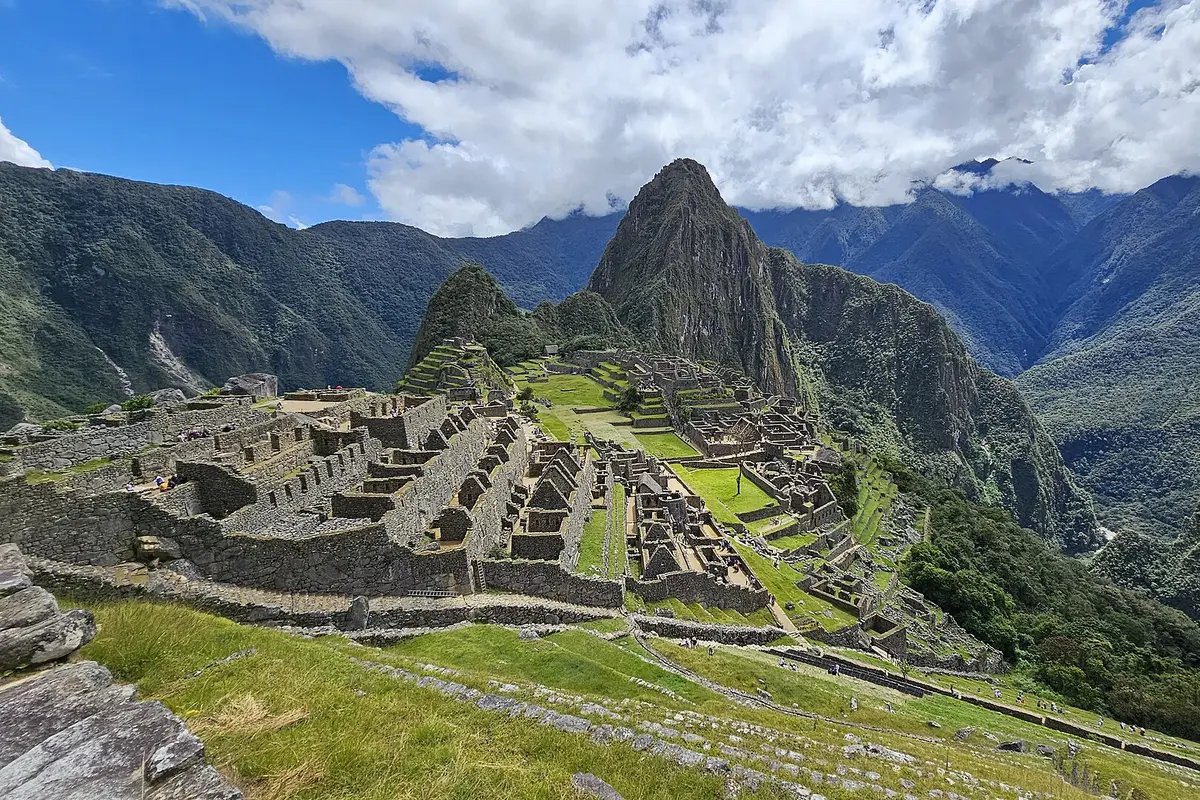
There are three realistic ways to see Machu Picchu. A guided day trip from Cusco bundles transport, the train, the bus up the hill, a guide and entry into one booking. You can also buy the entry ticket yourself and arrange the train and bus separately. Or you can walk in on a multi-day trek. All three end inside the same citadel, and entry is controlled by Peru's Ministry of Culture whichever way you arrive. The sections below set out what each option gives you and what it takes away.
What the Cusco day trip includes
The day trip is a group tour with a live guide in Spanish, English or Portuguese. You're collected from your accommodation in the historic centre of Cusco and taken by tourist bus to the station at Ollantaytambo. From there you ride the train to Aguas Calientes, the town below the citadel. Staff help you onto the bus to the entrance gate, and the guided visit lasts about two hours. After the bus back down, you have free time for lunch on your own before the train and bus back to Cusco. Entry, train, bus and guide are included.
The long day
This is a full day of about twelve hours, and most of it is travel. Pick-up depends on the train departure, so it can be very early. Your booking confirmation shows the time, and pick-up is only available within the historic centre of Cusco. After your visit you must be back at the Aguas Calientes station in time for the return train, then you ride the bus from Ollantaytambo to your accommodation. Plan the evening after it as a quiet one, and don't schedule anything demanding the next morning.
What the day trip doesn't give you
You can't choose your circuit. Admission is subject to availability when the tickets are issued, so the operator assigns whichever circuit is available. The booking is non-refundable, so check your date and the passport details before paying. You can only stay in the citadel for the guided tour, and you can't re-enter once you leave. Lunch, drinks and tips are extra. The Ministry's circuit panels also ask visitors to follow the entry time on the ticket and to walk only on authorised paths, so the guide leads the group along its assigned route and you can't wander off it. If any of those points is a deal-breaker, buying your own entry ticket is the better route.
The three circuits, as the Ministry defines them
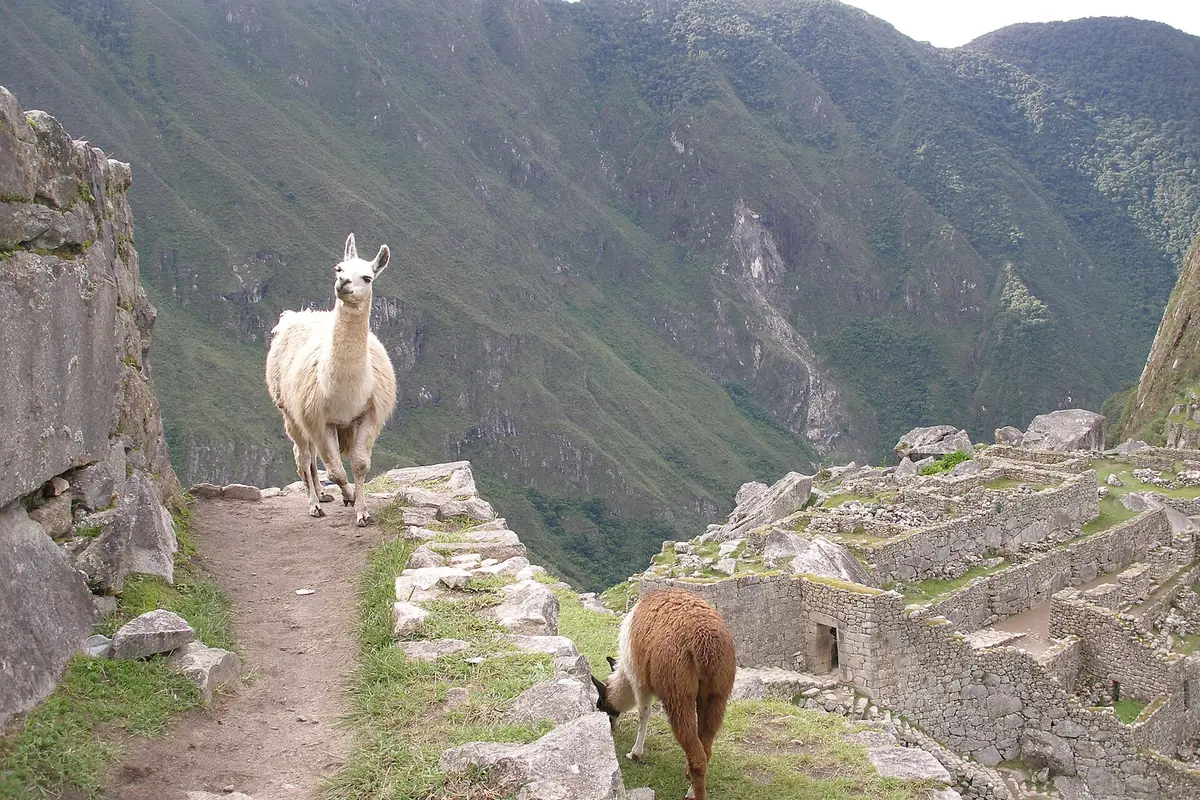
Since June 2024 the Ministry of Culture has grouped visits into three circuits, each with several routes. Circuit 1, Panoramic, climbs to the highest part for wide views along narrow paths and takes physical effort. Circuit 2, the Classic, covers the middle terraces and the whole urban area and needs regular effort. Circuit 3, Royalty, visits the Temple of the Sun, the House of the Inca and the Temple of the Condor with little effort, but its mountain routes need more time and fitness. Some routes run only in the high season. The Ministry's page is the reference, because routes can change.
Buying the entry ticket yourself
The Ministry sells entry tickets through its official platform, tuboleto.cultura.pe, and from an office in Machu Picchu Pueblo. Online, you choose a date, a circuit and route, and an entry time. The ticket carries your identity document details, and foreign visitors normally use their passport, so book with the passport you will carry. Office tickets are limited in number and give entry the day after you buy them, so they don't suit a fixed itinerary. Rules, caps and routes change, so check the Ministry's site close to your date rather than trusting an older page.
What else you'd book yourself
Going independently means a train ticket from Ollantaytambo or Cusco, a bus up from Aguas Calientes, and a guide if you want one. Inca Rail advises leaving at least an hour between the train's arrival and your entry time, and arriving at Ollantaytambo station at least 30 minutes before departure. Your entry ticket has an hourly slot with a short grace period after it, so a late train can cost you the slot. PeruRail also suggests checking train availability first, then the latest admission information, because the two have to line up. The day trip handles this sequencing for you, which is its main value.
Read next: Cusco to Machu Picchu by train and bus
Overnight, or a trek instead?
Many visitors spend one night in Machu Picchu Pueblo, which lets you choose an early entry slot without a long transfer the same morning. The classic Inca Trail normally takes four or five days and crosses a high pass of about 4,200 metres. It is walked only through registered operators, every trekker is accompanied by a guide, and daily permits are limited. Trekkers arrive through the Sun Gate, Inti Punku, on the ridge above the ruins. The trail closes each February for maintenance. The Lares and Salkantay treks are alternative routes. Trek operators arrange the trail permit, so ask yours how entry to the citadel is handled.
Read next: Inca Trail vs Salkantay, Lares & the Train
Huayna Picchu and Machu Picchu Mountain
The two climbs are routes within the circuits, not extras you can add on the day. Machu Picchu Mountain is a route of Circuit 1 and Waynapicchu is a route of Circuit 3. The mountain controls have no grace period after your entry time, unlike the main gate. The Ministry's panels say Circuit 1 routes demand physical effort, and that Circuit 3's mountain routes need more time and greater effort than its core route. Because the day trip assigns your circuit, it isn't the booking for a summit climb. If a peak is the point of your visit, buy your own ticket and choose that route.
Read next: Huayna Picchu or Machu Picchu Mountain?
What you can't bring in
The Ministry's code of conduct bans a long list of items, and staff can expel visitors who break it without a refund. The ones that catch people out are bag size, food, umbrellas and tripods. Large bags don't fit the limit, so leave them at your hotel in Cusco or at left luggage in Aguas Calientes. The rules apply to every circuit and every booking type, including guided groups, and park guards and the National Police enforce them inside the monument.
- Bags larger than 40 x 35 x 20 cm
- Food or kitchenware, including thermoses
- Umbrellas, walking sticks, tripods and selfie sticks
- Heels or hard-soled shoes, and baby strollers
- Drones and any aerosol
Who this isn't for
The day trip isn't for you if you want to choose your circuit, climb a peak, or keep a refundable booking. It also isn't for anyone who dislikes very early starts and a full day of transfers. If you want long, unhurried time among the ruins, buy your own ticket and stay a night in Aguas Calientes instead. Trekkers should book their route separately with a licensed operator.
Frequently asked questions
Can I choose my circuit on the day trip?
No. The operator assigns the circuit from what is available when the entry tickets are issued. If choosing matters, buy your own entry ticket, where you pick the circuit, route and entry time.
Where do I buy official Machu Picchu entry tickets?
On the Ministry of Culture's official platform, tuboleto.cultura.pe. A limited number are also sold in person in Machu Picchu Pueblo for entry the next day. The Ministry's website is the place to check current rules.
Is the day trip refundable?
No, the booking is non-refundable. Check your date and the passport details of every traveller before you pay. Pick-up depends on the train, and your confirmation shows the time.
Do I need my passport?
Yes. Bring the passport you booked with. Entry tickets carry your identity document details, and you show your ticket and ID at the gate.
How long do I get inside the citadel?
The guided visit on the day trip lasts about two hours. Routes differ in length and effort, and the Ministry's circuit pages describe each one.
Is a day trip enough, or should I stay overnight?
A day trip is enough to see the citadel, but it is a long day. Many visitors choose one night in Machu Picchu Pueblo, which lets you take an early entry slot without a same-morning transfer.
Sources
- Ministry of Culture: Circuits and routes of Machu Picchu
- Ministry of Culture: Online tickets
- Ministry of Culture: Tickets sold in person
- Ministry of Culture: Visiting hours and entry times
- Ministry of Culture: Code of conduct
- PeruRail: Tickets to Machu Picchu
- Inca Rail: Ollantaytambo to Machu Picchu
- Wikipedia: Inca Trail to Machu Picchu