Getting there, timing and what to expect
Cusco to Machu Picchu by train and bus
How Cusco, Ollantaytambo, the train and the bus up to the citadel fit together, plus altitude, weather, what to wear and what you will see.
Check dates and availability ↗Quick answer
There's no road to Aguas Calientes, the town below Machu Picchu, so you arrive by train or on foot. Most day trips go by road from Cusco to Ollantaytambo, take the train to Aguas Calientes, then ride a shuttle bus up to the gate. Allow at least an hour between the train's arrival and your entry time, and expect a long day.
The route in four steps
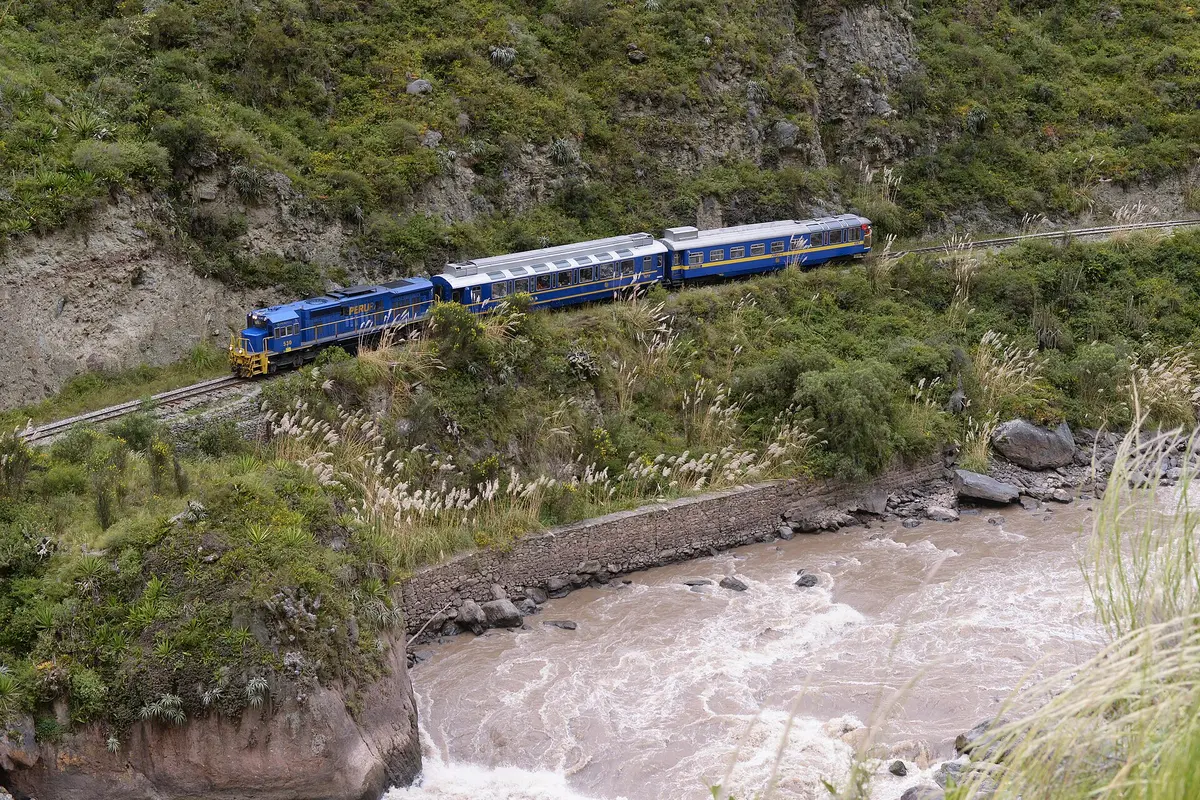
Machu Picchu has no road. The only ways into Aguas Calientes, officially Machu Picchu Pueblo, are the train or a hike. The usual chain is a road transfer from Cusco to a train station, the train down the Urubamba valley, a shuttle bus up the hill to the citadel gate, and the same in reverse. On a day trip all of that is arranged for you. If you go independently, you book the train, the bus and the entry ticket separately. The train ticket and the entry ticket come from different sellers, and neither guarantees the other, so a train you can book is no proof that an entry slot is still open.
Cusco to Ollantaytambo
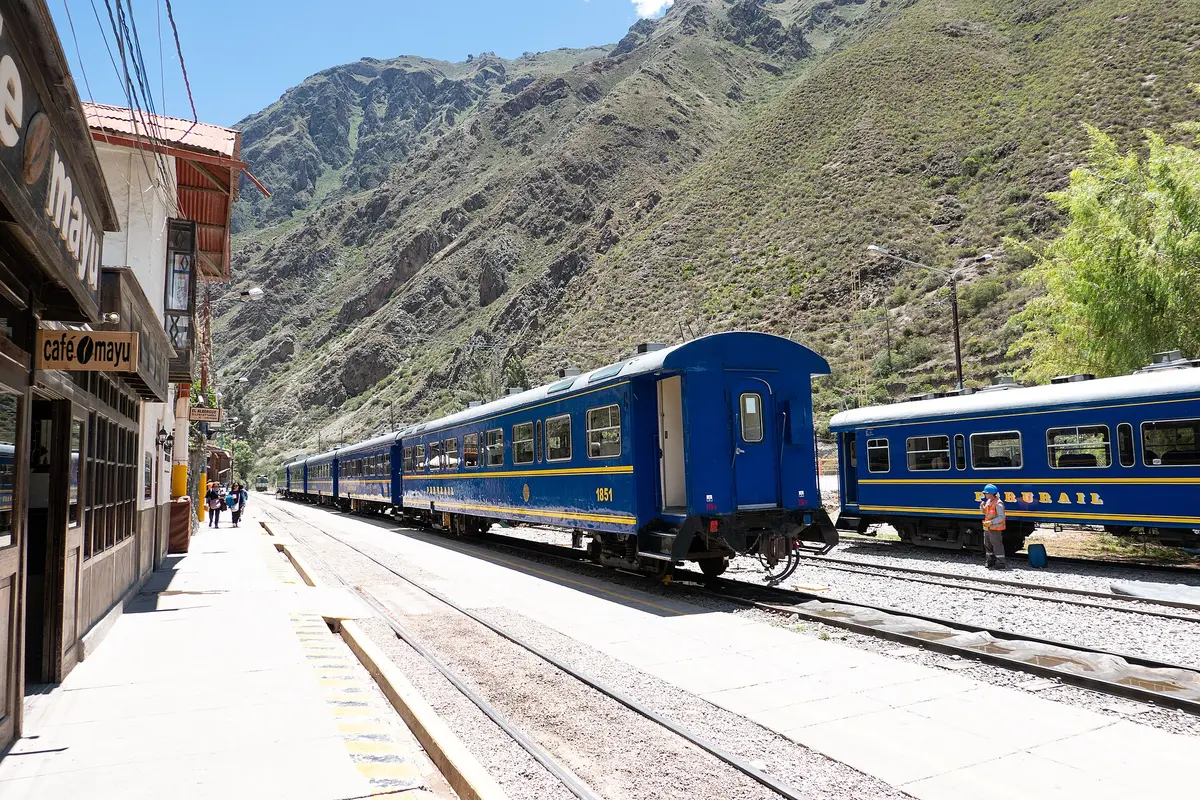
Many day tours go by road from Cusco to Ollantaytambo station, in the Sacred Valley. PeruRail also runs services from stations in Cusco, and some bus-and-train services use a transfer station, so check which station your ticket names. At Ollantaytambo, Inca Rail asks passengers to arrive at least 30 minutes before departure. On a tour, the pick-up point and time are in your booking confirmation, and they depend on which train you're on. If you arrange the transfer yourself, leave enough margin to reach the station in good time.
The train
The train from Ollantaytambo to Aguas Calientes typically takes between one and a half and two hours, depending on the service. PeruRail and Inca Rail each run several service classes, from standard seating to panoramic cars with large windows. Both limit luggage: PeruRail allows one backpack or one carry-on bag per passenger, with size limits on its baggage page. Leave suitcases in Cusco and travel with a small day bag. PeruRail recommends checking train availability first, then the latest admission information, because the train has to land you in time for your entry slot. Each company sells its tickets online.
Aguas Calientes and the bus up
Aguas Calientes sits at about 2,040 metres, lower than the citadel, and takes its Spanish name from its natural hot baths. The ruins are about 6 kilometres away. The shuttle bus up to the entrance gate takes about 20 to 25 minutes. Walking up is possible but takes roughly one and a half to two hours. Most visitors with a timed entry slot take the bus, because the walk uses time and energy you'll want on site. The walk also shares the same constraint as the bus: you need to reach the gate within your hour.
Timing: the entry slot rules the day
Your ticket shows an entry time. Slots run hourly through the day, and the main gate allows a short grace period after your hour. The mountain controls have no grace period at all. Inca Rail advises at least an hour between the train's arrival and your entry time, to absorb delays. On a day trip, the group is sequenced for you, but you must still be back at the Aguas Calientes station in time for the return train. Keep your passport and tickets together, because you show them at the gate.
Read next: Machu Picchu tickets: what to book
Altitude: Cusco is the hard part
Cusco sits at about 3,400 metres, the citadel at about 2,430 metres, and Aguas Calientes lower still. The NHS says altitude sickness usually occurs above 2,500 metres, mostly when people go up fast. Symptoms include headache, nausea, tiredness, dizziness and poor sleep. If you feel unwell, rest and don't go higher. Seek medical help straight away if you're confused, short of breath at rest or very drowsy. Spending a few days in Cusco or the Sacred Valley first helps, and Inca Rail also advises plenty of water, little alcohol in the first days and a flexible schedule. Fitness doesn't prevent altitude sickness, and anyone with heart or lung conditions should talk to a doctor before travelling.
Read next: Acclimatising for Machu Picchu
When to go, and what the weather does
Inca Rail calls May to September the most stable period, with clearer views, but June to August is the busiest. November to March is the rainy season, with mist, cloud and afternoon showers, and February is the wettest month. April and October fall in between. Late June is especially busy because of Inti Raymi, celebrated in Cusco on 24 June. Weather is generally steadier in the morning, and mid-morning to early afternoon is the busiest time on site. If heavy rain is forecast, a morning entry gives you the best chance of drier conditions.
What to wear and bring
Wear comfortable shoes, because the paths and steps are stone. The code of conduct bans heels and hard-soled shoes, and umbrellas, so bring a compact rain poncho. Dress in layers, add a sun hat and sunscreen, and pack for rain if you visit outside the dry season. Insect repellent and some cash are worth packing, along with a camera and sunglasses. Pets, smoking, alcohol and drugs aren't allowed. Your bag must be no larger than 40 x 35 x 20 cm, and food can't go inside the citadel.
What you'll see on site
What you see depends on your circuit. The Ministry's panels describe Circuit 2 as taking in the middle terraces and the whole urban area, including the agricultural terraces, a granite quarry, the Sacred Plaza and the Sacred Rock. Circuit 3 visits the Temple of the Sun, the House of the Inca and the Temple of the Condor. Circuit 1 climbs to the highest part for wide views. A guided visit on the day trip lasts about two hours, and you follow the route in the set direction rather than doubling back. Because the day trip assigns the circuit, ask your guide which one you have when you meet at the gate.
Language, children and access
The day trip's live guide speaks Spanish, English or Portuguese, so check the language listed for your date before you book. Paths and steps are stone, and the routes involve climbing. The Ministry describes Circuit 1 as demanding and Circuit 3's main routes as needing little effort. Strollers and walking sticks are on the banned list, and the pages we checked don't describe step-free access. If anyone in your party uses a mobility aid or pushchair, ask the operator and the Ministry before you book. The day itself involves a bus, a train and the walk on site, so factor in how each part suits everyone travelling.
Who this isn't for
A day trip is a poor fit if you've just flown into Cusco, because altitude and a very early start are a hard combination on your first day. It also isn't for anyone who needs a relaxed pace or step-free routes. If you want to linger, stay a night in Aguas Calientes and take an early entry slot instead. People who dislike early starts or long hours on transport should also look at that option.
Frequently asked questions
How do you get from Cusco to Aguas Calientes?
By road to a train station, usually Ollantaytambo, and then by train. There is no road to Aguas Calientes. PeruRail also runs services from stations in Cusco. A day tour arranges the whole chain.
How do you get from Aguas Calientes to Machu Picchu?
By shuttle bus, which takes about 20 to 25 minutes to the entrance gate. You can also walk, which takes roughly one and a half to two hours uphill.
How long is the train from Ollantaytambo?
Typically between one and a half and two hours, depending on the service and departure.
What is the best time of year to go?
May to September is the most stable and clearest, but June to August is busiest. November to March is rainy, with more mist and cloud. Mornings are generally steadier.
Will I get altitude sickness?
It's possible, mostly in Cusco at about 3,400 metres rather than at the citadel at about 2,430 metres. Go up slowly and rest if you feel unwell. Seek medical help if you are confused or short of breath at rest.
Can I bring a large bag?
No. Bags larger than 40 x 35 x 20 cm aren't allowed in the citadel, and PeruRail allows one backpack or carry-on bag per passenger. Leave larger luggage in Cusco.
Sources
- Ministry of Culture: Circuits and routes of Machu Picchu
- Ministry of Culture: Code of conduct
- Ministry of Culture: Visiting hours and entry times
- PeruRail: Machu Picchu and how to reach it
- Inca Rail: Ollantaytambo to Machu Picchu
- Inca Rail: Altitude in Machu Picchu and Cusco
- NHS: Altitude sickness
- Wikipedia: Aguas Calientes, Peru